How to Choose Finishes for a Pool and Its Concrete Surrounds
Homeowners comparing concrete paint colours for a pool renovation often start with the shade they want underfoot. The same yard can have a sunny stretch of paving, a shaded path and a strip beside the pool that stays wet long after a swim. A concrete sealer may suit the surrounding slab, depending on its condition and the finish needed in those areas. The shell inside the pool faces different demands because it spends most of its time underwater. Where the surface is compatible, epoxy pool paint is one option for that submerged area.
Start with the surfaces already there
Choosing separate finishes for the pool shell and its concrete surrounds lets homeowners compare colour, surface condition and how each area is used. For the shell, the first questions are what it is made of and whether it has been painted before. Bare concrete and a sound existing coating can require different preparation. When the previous finish is unknown, old invoices or leftover tins can help identify it, and a contractor can confirm compatibility before quoting for a new coating.
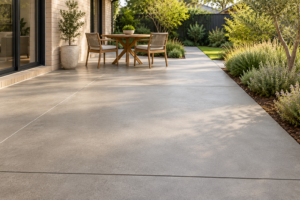
Around the pool, the slab might be plain, textured or already coated. Patches near the gate or outdoor shower may also look different from the rest of the concrete. It helps to point out any flaking, previous repairs or areas where water collects during a site inspection. A quote can then explain how the surface will be prepared, whether repairs are included and how much of the existing texture will show through the new finish.
Compare poolside samples where they will be used
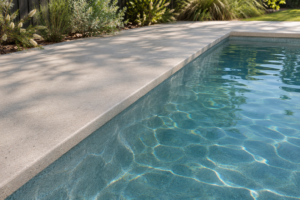
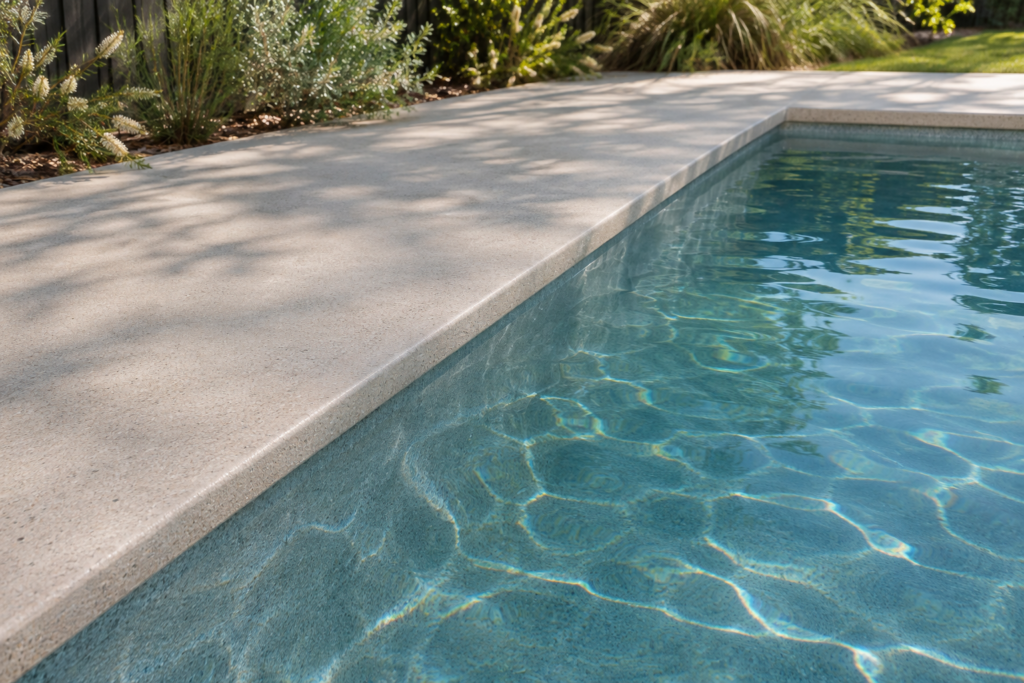
A sample viewed indoors can look different next to a pool in full sun. Homeowners can place two or three samples near the coping, which is the trim around the pool edge, and view them from the patio as well as from beside the water. Checking the samples in the morning and late afternoon shows how they sit alongside the house, fencing and planting as the light changes.
A clear finish leaves the character of the existing slab visible, including variations between older concrete and repaired areas. A more opaque finish can give the surround a more even colour, though the appearance still depends on the product and how the surface is prepared. If the slab has a prominent repair, a sample patch in an inconspicuous spot can help show whether the chosen finish blends it in or leaves it visible.
Texture deserves its own check in areas that regularly get wet. Product data can show whether a particular coating system has been tested for wet slip resistance and whether the result depends on a specified additive or application method. The homeowner can ask the installer to confirm that the quoted finish includes those details, particularly along the route from the pool steps to the gate or outdoor shower.
Choose the shell colour and plan the downtime
A dry swatch is only a starting point for the colour inside a filled pool. Sunlight and cloud cover can change how the same shade appears through water. Photos of filled pools with a similar finish can give a better sense of the effect, especially if they show the pool in both sun and shade. A homeowner who wants the water to look softer or brighter can compare those examples alongside the poolside samples.
The schedule also needs to account for preparation, application and curing. A coating can feel dry before it is ready for immersion, so the pool’s refill date should follow the product’s technical instructions for the conditions on site. The surround may have its own waiting period before it can take foot traffic. A written quote that separates those milestones helps the household see when each part of the area will be available again and plan around a weekend gathering or school holidays.