How Wood Wool Improves Interior Acoustic Design
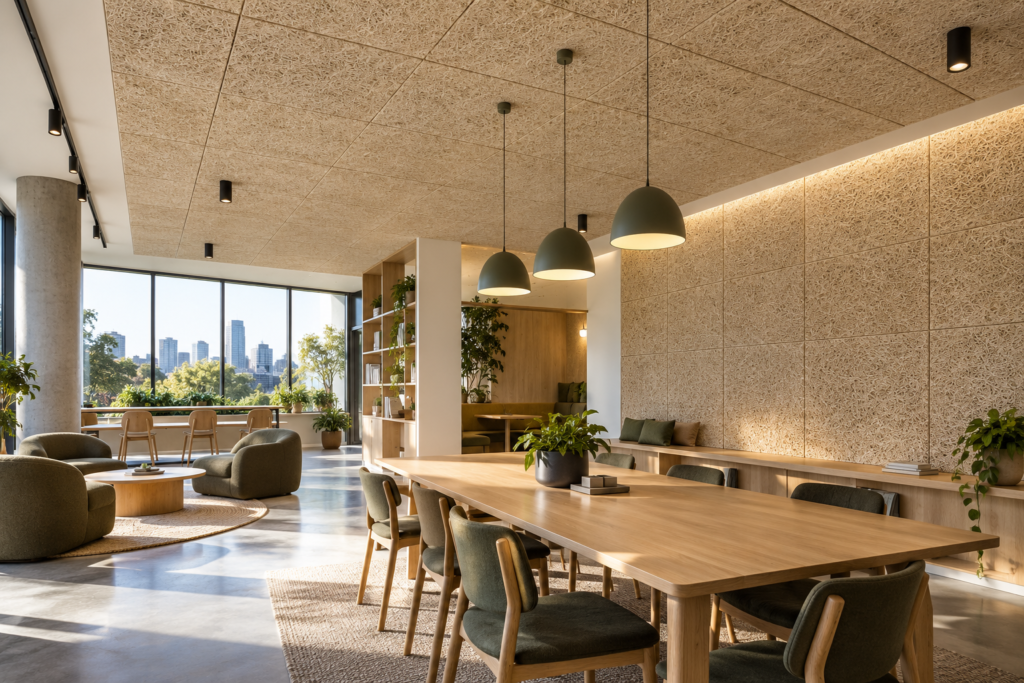
A thoughtfully specified wood wool ceiling can help architects manage sound while introducing warmth and texture to an interior. This natural-looking material is increasingly considered for commercial, educational and community spaces where acoustic comfort and visual character are equally important. Available in various colours, formats and edge profiles, wood wool ceiling tiles can complement both understated and expressive design concepts. The textured surface also creates visual depth that is difficult to achieve with conventional smooth finishes. When a project requires acoustic treatment across vertical surfaces, wood wool wall panels provide another way to control sound without making the room feel overly technical.
Why Acoustic Comfort Matters
Poor acoustics can affect how people experience and use an interior. Excessive reverberation makes conversations harder to follow, increases background noise and can cause occupants to feel distracted or fatigued. These effects are particularly noticeable in classrooms, offices, restaurants, libraries and multipurpose areas, where several conversations or activities may occur at once.
Hard materials such as glass, concrete, plasterboard and polished floors reflect sound rather than absorbing it. While these finishes may suit the visual direction of a project, relying on them throughout a room can create an uncomfortable acoustic environment. Introducing absorptive surfaces helps reduce reflected sound and supports clearer communication.
Acoustic treatment is most successful when considered early in the design process. This allows its placement, colour and scale to become part of the architecture rather than appearing as a later correction.
Combining Texture with Practical Performance
Wood wool products are generally made from fine wood fibres combined with a mineral binder. Their open, textured surfaces help absorb sound, while their appearance brings a natural quality to contemporary interiors.
Unlike acoustic products designed to disappear, wood wool can be used as a visible design feature. Panels may be arranged in repeated patterns, installed in contrasting colours or used to define particular zones. Neutral tones can create a calm background, while stronger colours may help establish identity within schools, workplaces and public buildings.
The material also works well alongside timber, concrete, brick and exposed building services. Its texture can soften these harder surfaces without undermining an industrial or minimalist design language.
Selecting the Right Installation Approach
The appropriate format depends on the room, the available surface area and the intended visual outcome. A suspended system may suit projects that require access to lighting, ventilation and other services above the ceiling. Direct fixing may be more appropriate when ceiling height is limited or when the structure is intended to remain visually simple.
Wall applications can provide targeted acoustic treatment in areas where installing a full acoustic ceiling is impractical. They may be positioned behind seating, along circulation areas or near zones where conversations and group activities occur.
Designers should also consider panel thickness, size, mounting method and the construction behind the visible surface. Acoustic performance depends on the complete installed system rather than appearance alone. Product data and project-specific advice can assist with matching the system to the room’s requirements.
Supporting Biophilic Interior Design
Natural materials and textures are commonly used to create interiors that feel warmer and more connected to the environment. This approach is often associated with biophilic design, which explores ways of strengthening the relationship between people and nature within buildings.
Wood fibre surfaces can support this direction without requiring an interior to rely entirely on solid timber. Their irregular texture introduces subtle variation and can reduce the sterile appearance sometimes associated with highly finished commercial environments.
Colour selection also influences the result. Natural shades can reinforce an organic palette, while custom finishes allow the material to work within brand colours or interior wayfinding systems. Careful coordination with lighting can further highlight the surface texture and create changes in depth throughout the day.
Applications Across Different Interiors
Educational facilities can benefit from acoustic finishes that improve speech clarity and help manage noise during collaborative learning. In offices, absorptive materials can support concentration while making meeting rooms and shared spaces more comfortable.
Hospitality venues often require a balance between atmosphere and communication. A lively restaurant may still need enough sound control for guests to speak comfortably. Textured acoustic finishes can contribute to the venue’s character while reducing harsh reflections from floors, windows and furniture.
Community centres, libraries and cultural buildings may have several functions within the same space. Adaptable acoustic solutions help these interiors accommodate presentations, performances, meetings and everyday activities without relying solely on electronic sound systems.
Creating a Cohesive Result
Effective acoustic design should feel integrated with the wider interior. Panel dimensions can align with lighting, joinery, structural elements and circulation paths to create a deliberate composition. Repeating colours or materials elsewhere in the room can also help the acoustic treatment feel connected to the overall scheme.
Maintenance, durability and access requirements should be reviewed alongside acoustic performance. Areas exposed to frequent contact may need a different specification from surfaces installed overhead. Early coordination between architects, interior designers, acoustic consultants and installers can prevent conflicts and support a cleaner finished result.
Wood wool offers a practical way to improve acoustic comfort while adding texture and visual interest. When its format, placement and finish are carefully selected, it becomes more than a sound-control product. It forms part of the architectural language of the space and contributes to an interior that is comfortable, functional and distinctive.